Field Notes

Field Mishaps

Nobody tells you that building off-grid is mostly a logistics business that occasionally involves a cabin. These are the mishaps that taught me that.

Chapter 01

The Winter Freight Run

Everything for the cabin came in by snow machine. There is no road to the site, no delivery truck, no "we'll have that there Tuesday." There is a U-Haul, a staging yard, a skid steer, a fleet of machines, and miles of frozen trail — and if any link in that chain breaks, the build stops.
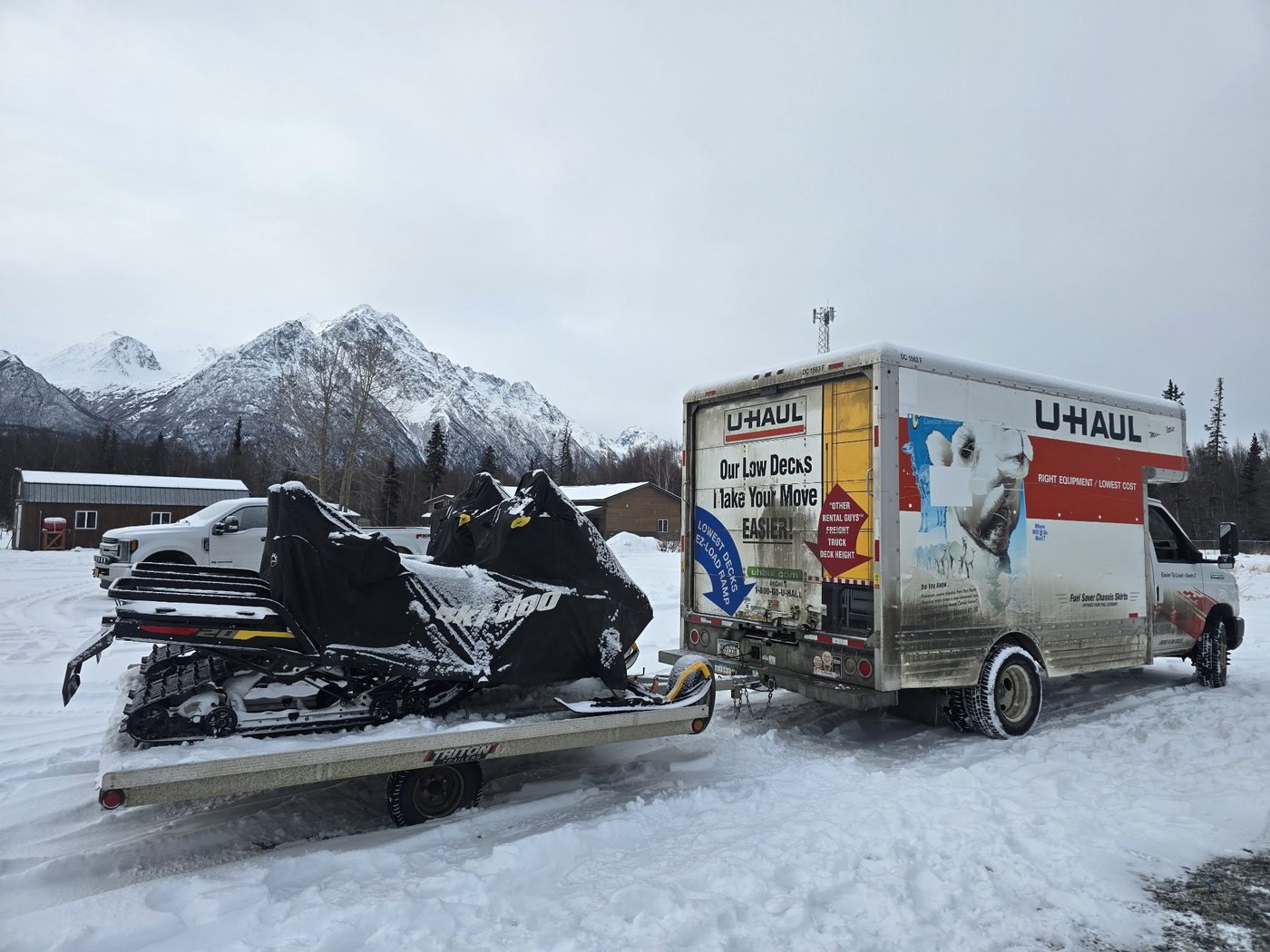
U-Haul truck parked next to a trailer loaded with snow machines in a snowy yard
The U-Haul made it as far as the road goes. After that, it's snow machines.

Winter is the only season you can move real weight. The ground is frozen, the rivers are bridges, and a freight sled can carry what a boat never could. So winter becomes freight season: you stage everything, wrap everything, number everything, and haul it while the cold holds.
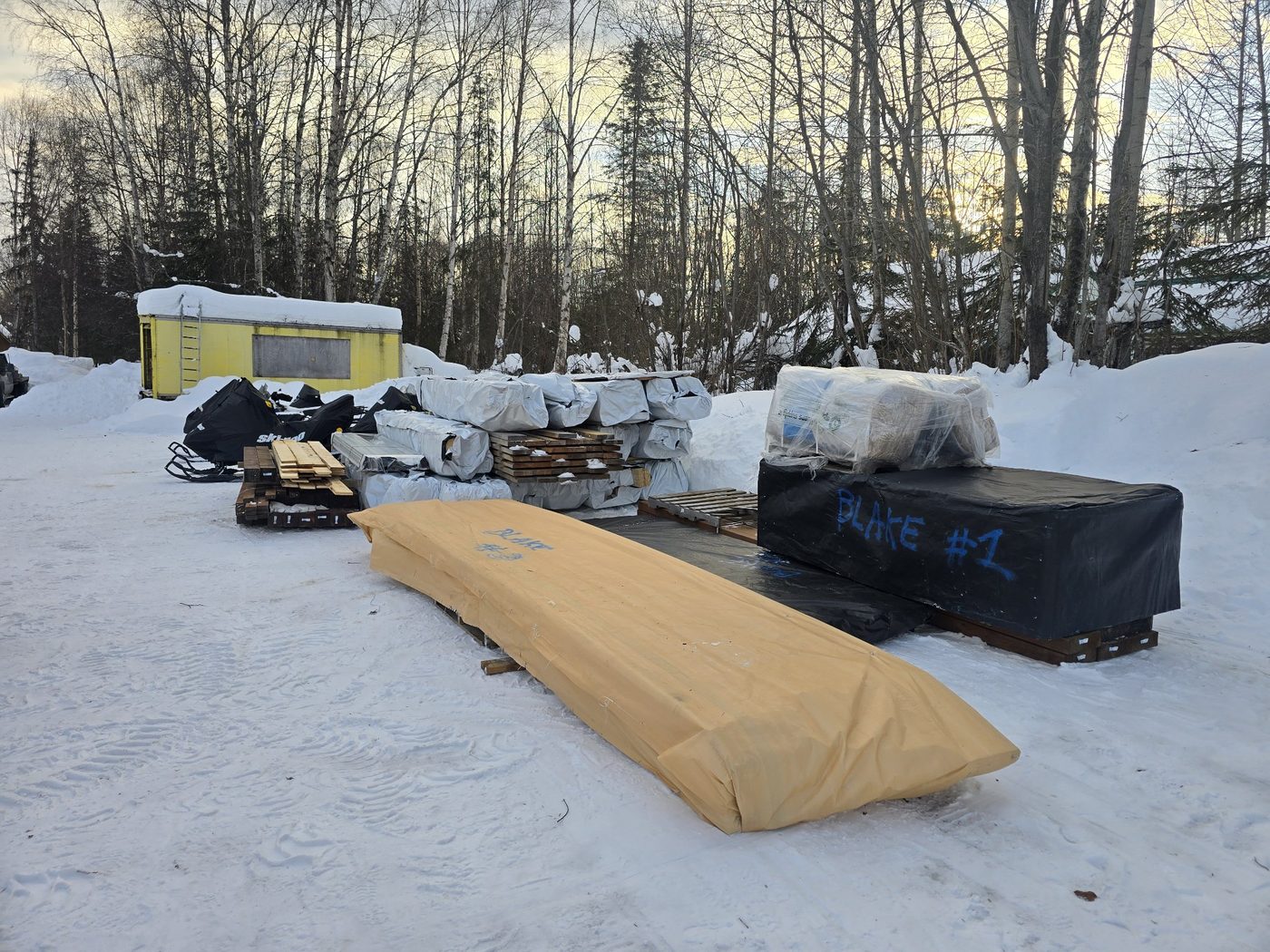
Wrapped lumber bundles staged in the snow, one marked Blake #1
Everything staged, wrapped, and numbered at the yard.
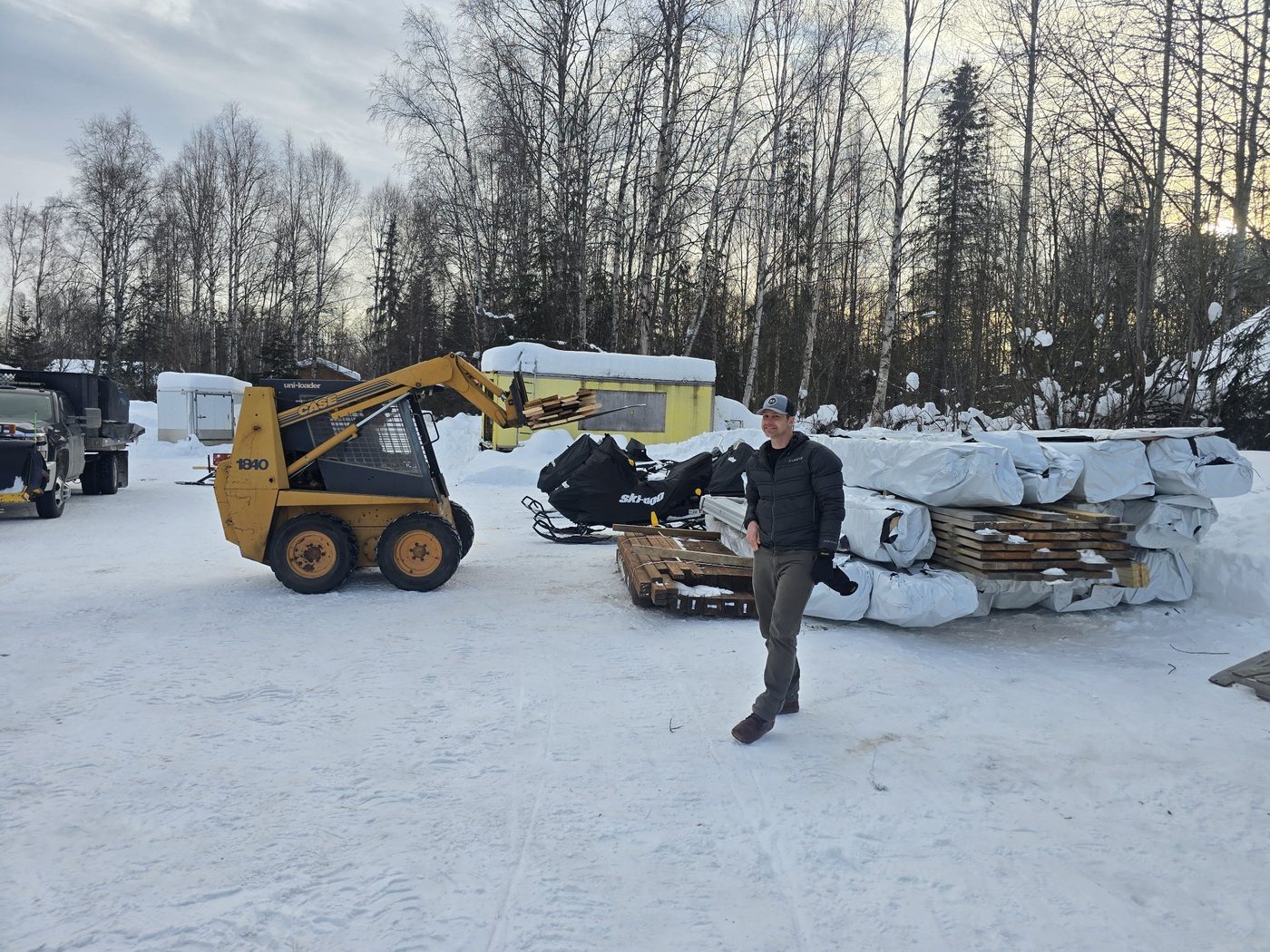
Chad standing beside stacked lumber while a Case 1840 skid steer loads material behind him
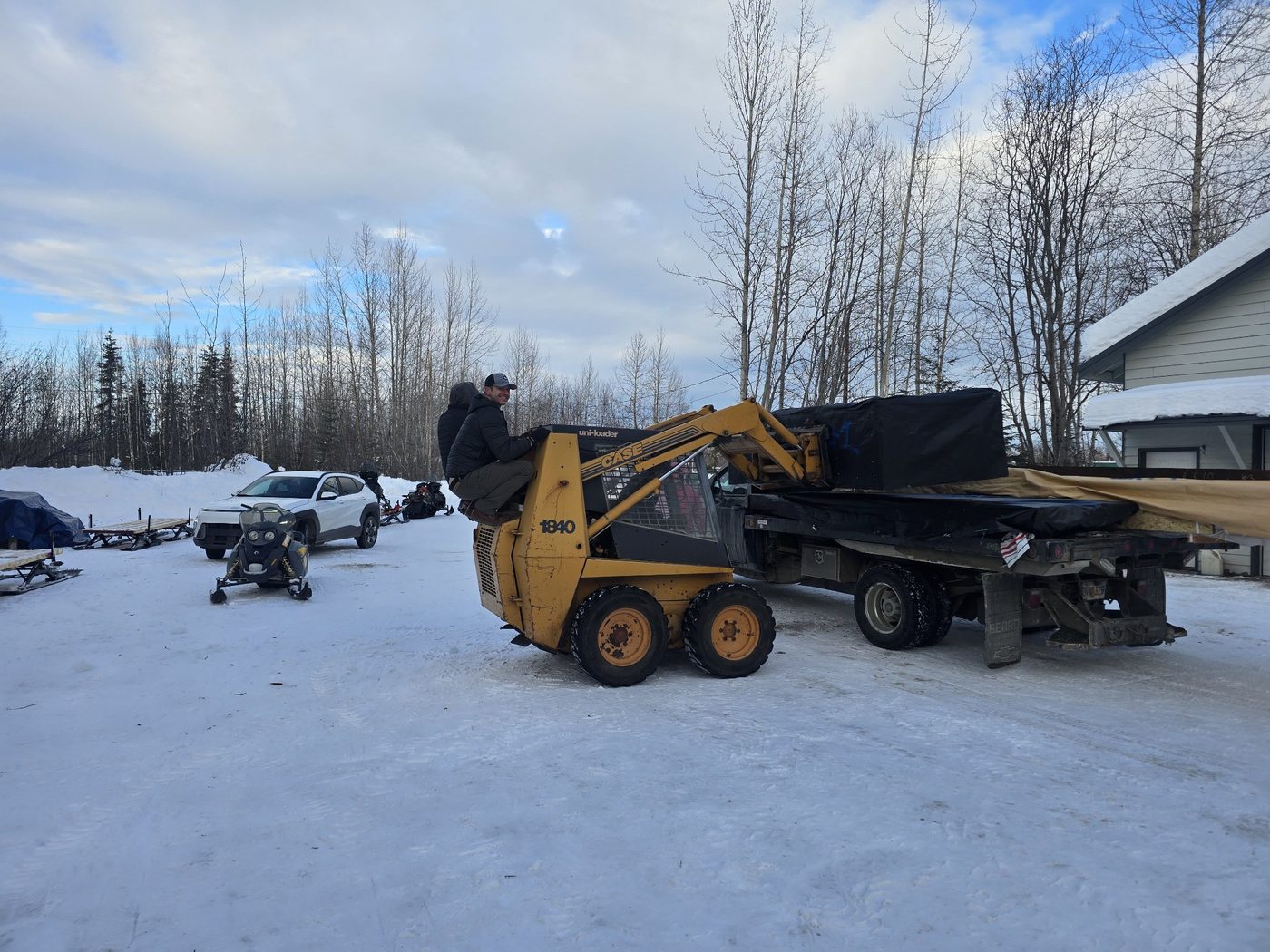
The Case 1840 skid steer earns its keep.
Chad riding on the back of the Case skid steer as it loads a flatbed truck
Riding shotgun on the skid steer. Safety third.
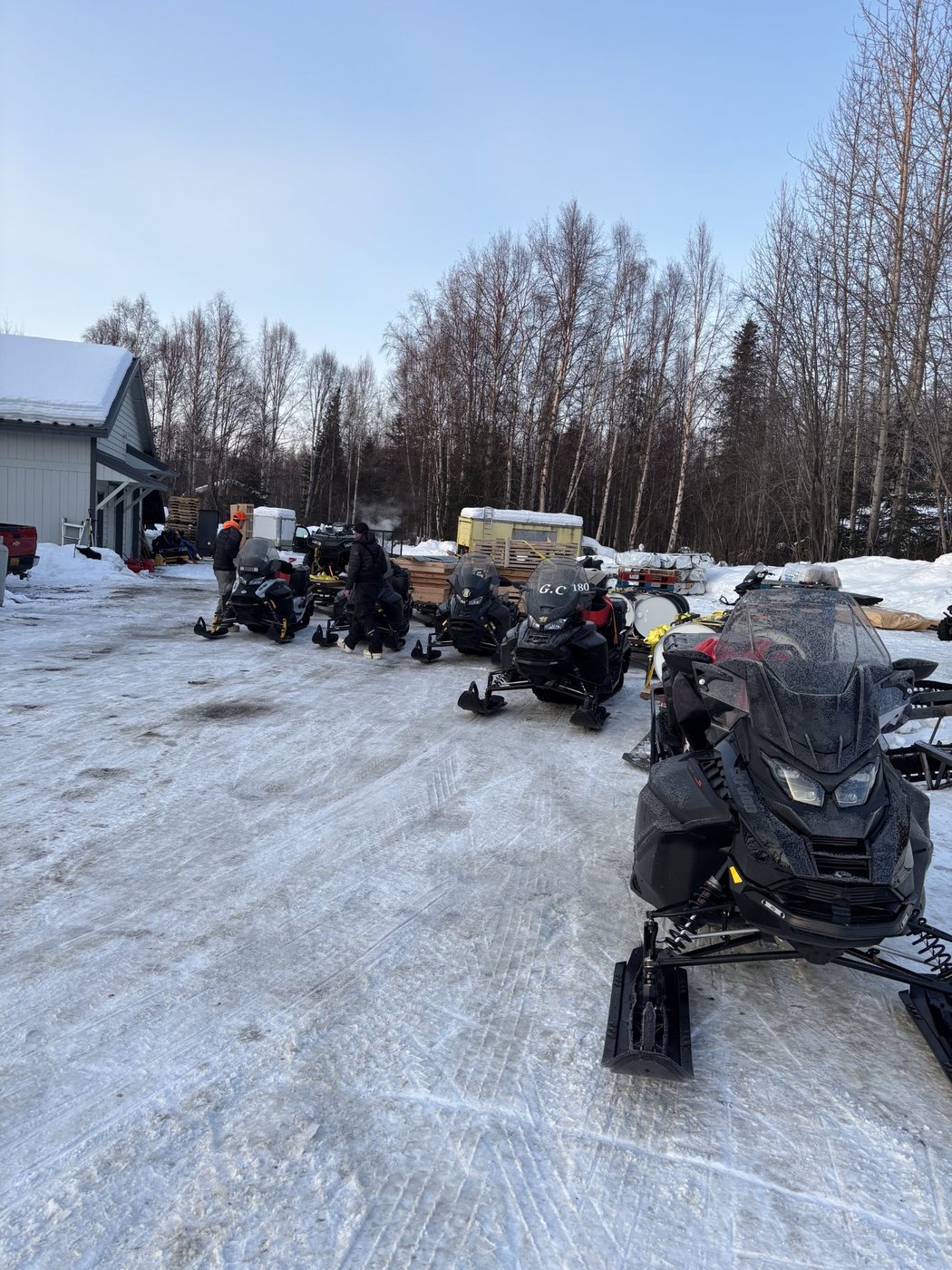
Snow machines parked by a building with crew members preparing for a freight run
Machines fueled, crew ready, weather holding. Go time.

Then the real freight train: machines pulling loaded sleds — lumber, fuel, barrels, everything the cabin needed — strung out along miles of trail. It looks like an expedition because it is one. Every bundle on those sleds was measured, cut, wrapped, and loaded by hand, twice: once at the yard, once at the site.
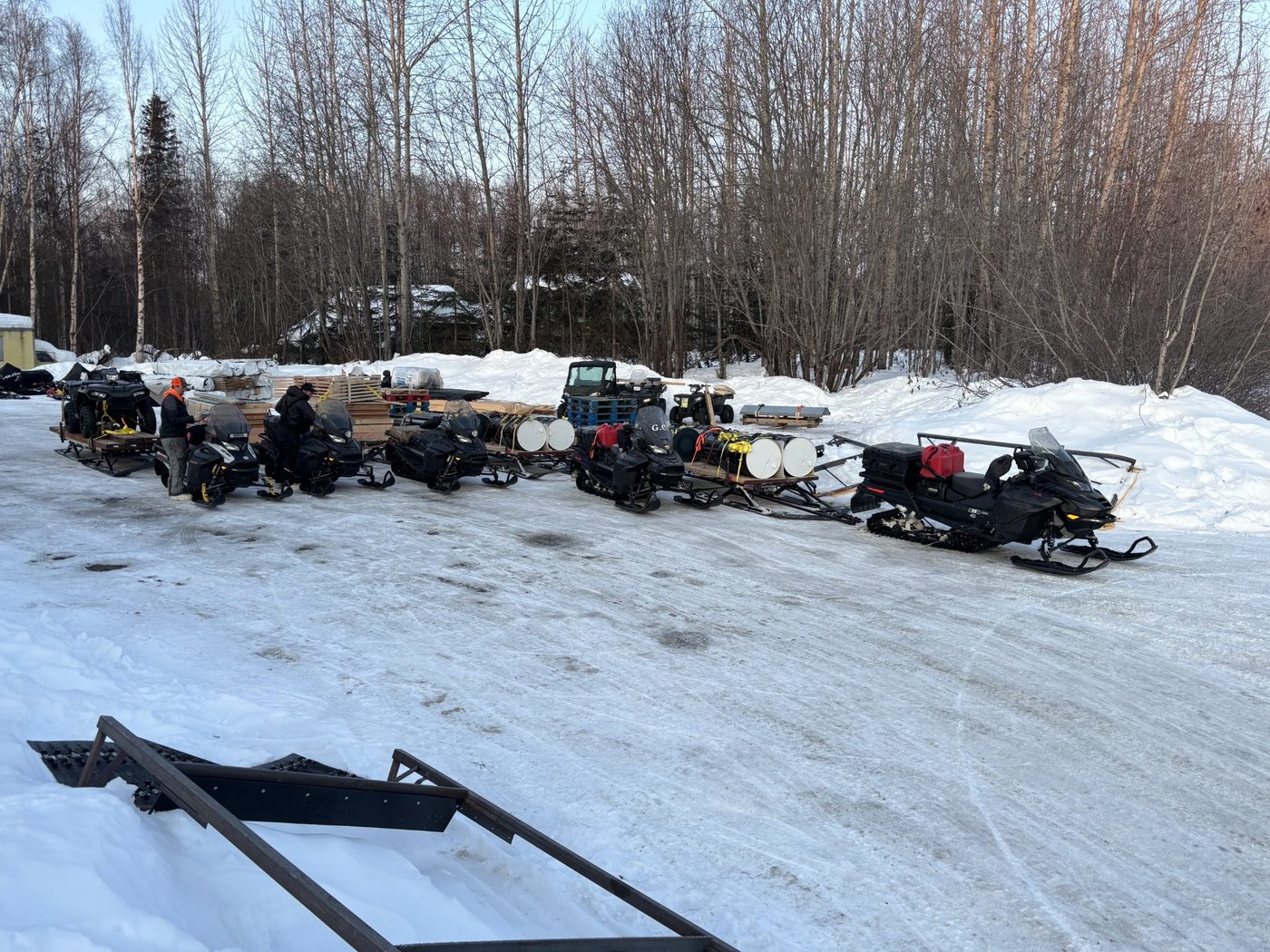
A line of snow machines hitched to freight sleds loaded with barrels and lumber
The freight train. Every stick of the cabin rode a sled like these.
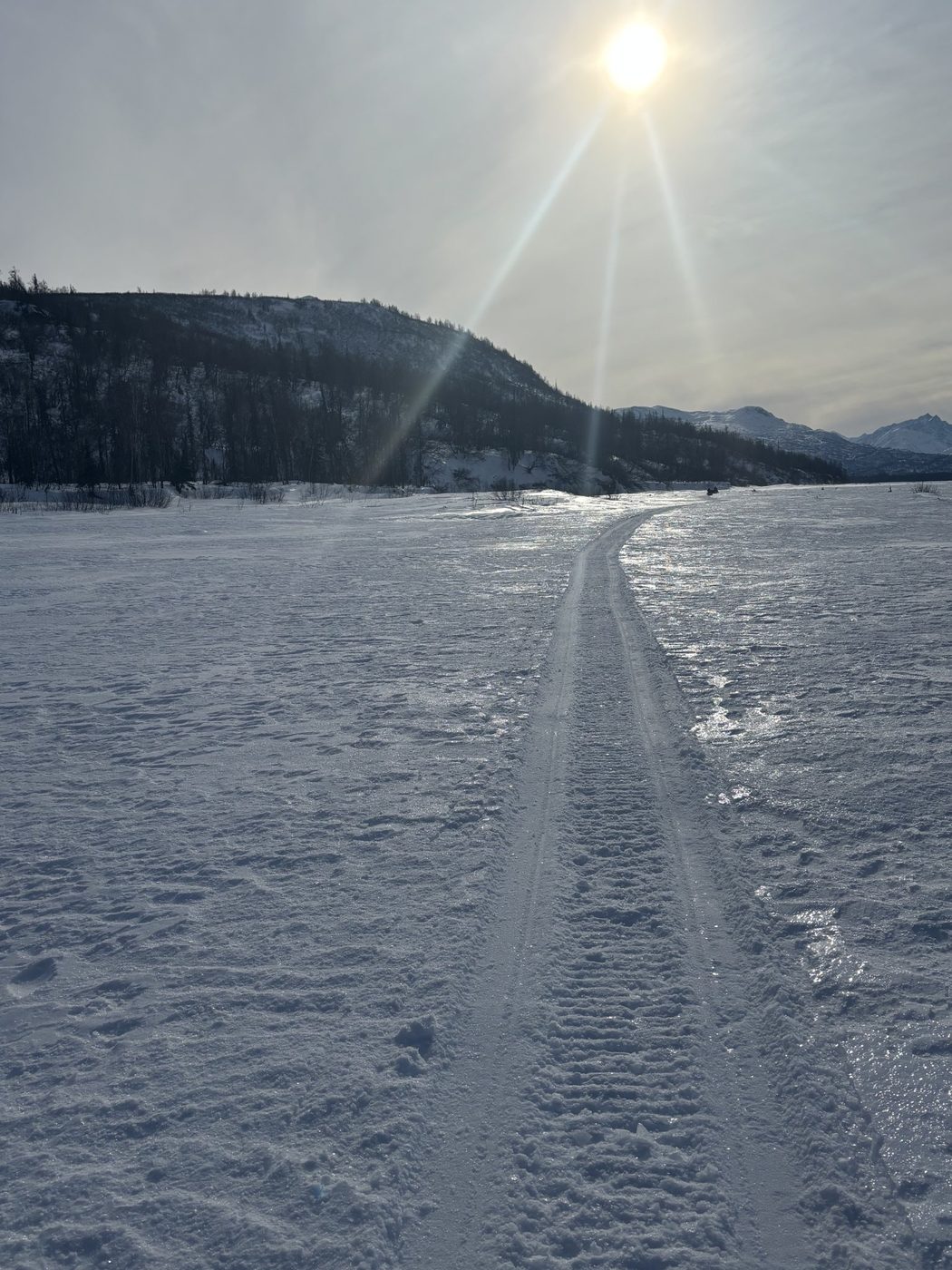
A snow machine trail stretching into the distance across a frozen landscape
Miles of this, between the road and the build site.
"Plan the logistics like the build depends on it. It does."
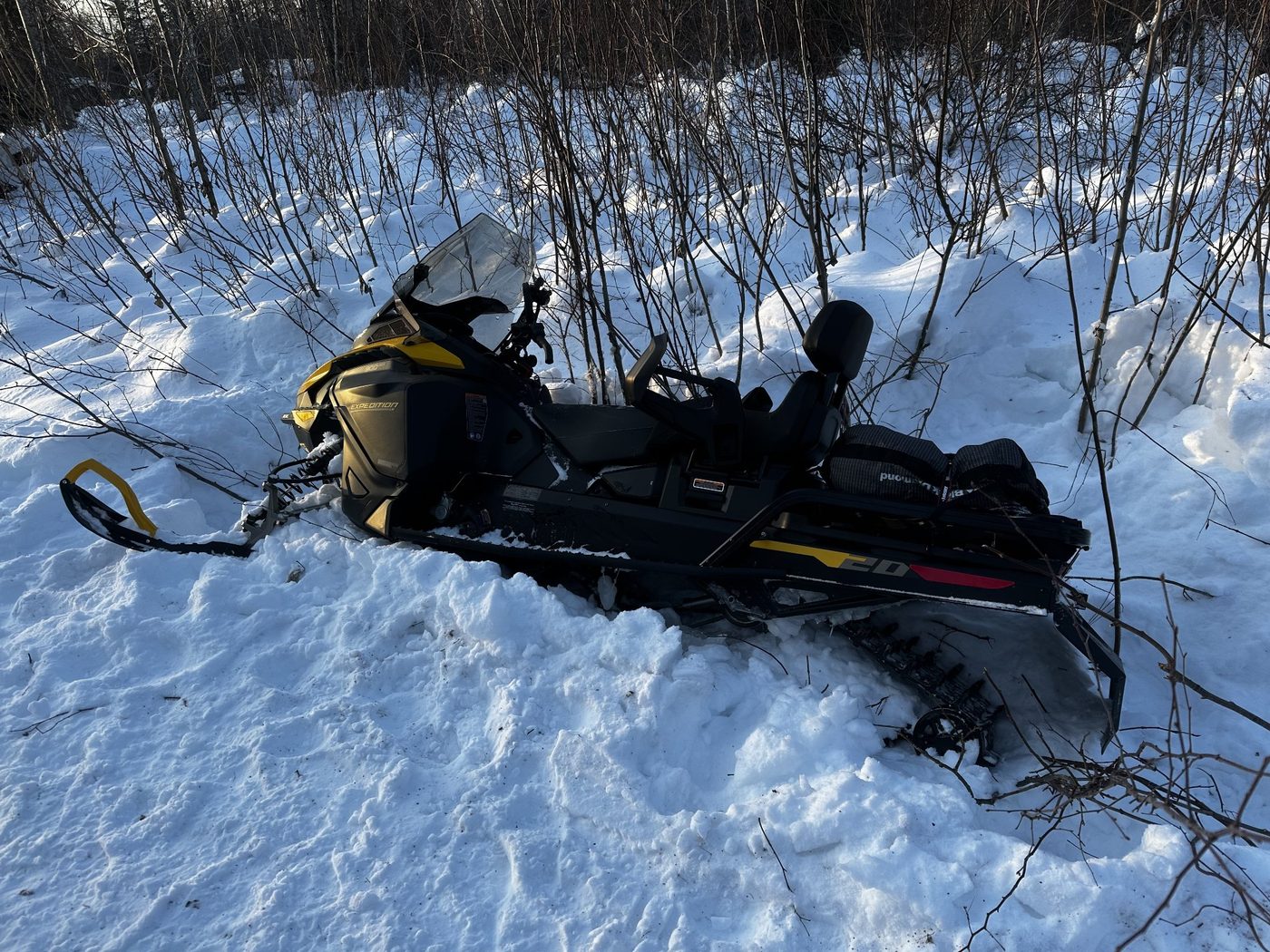
A Ski-Doo Expedition snow machine buried deep in snow among brush
And occasionally this. Digging out a 600-pound sled builds character — and costs you half a day.

The lesson

Budget your winter hauling like a line item, not an afterthought. Count the trips, pad the trips, and assume at least one machine gets buried. The cabin goes up fast. Getting the materials there is the actual project.

Chapter 02

The Yentna Boat Saga

Summer logistics meant the boat. The Yentna River is the highway when the ice is gone — and like any highway in Alaska, it collects its toll in humility.
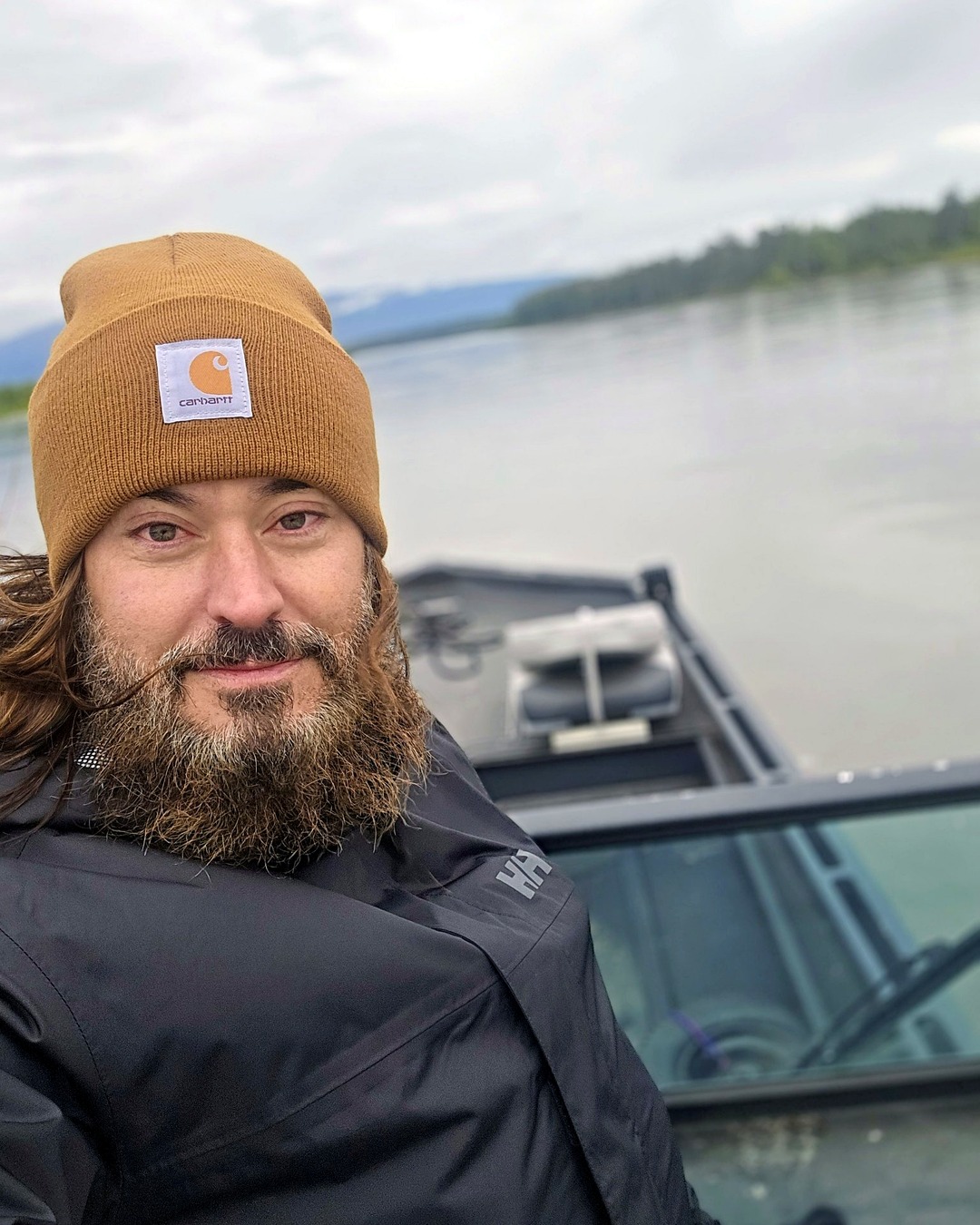
Chad in a Carhartt beanie on the boat, river behind, heading out to the property
Your captain for this saga.
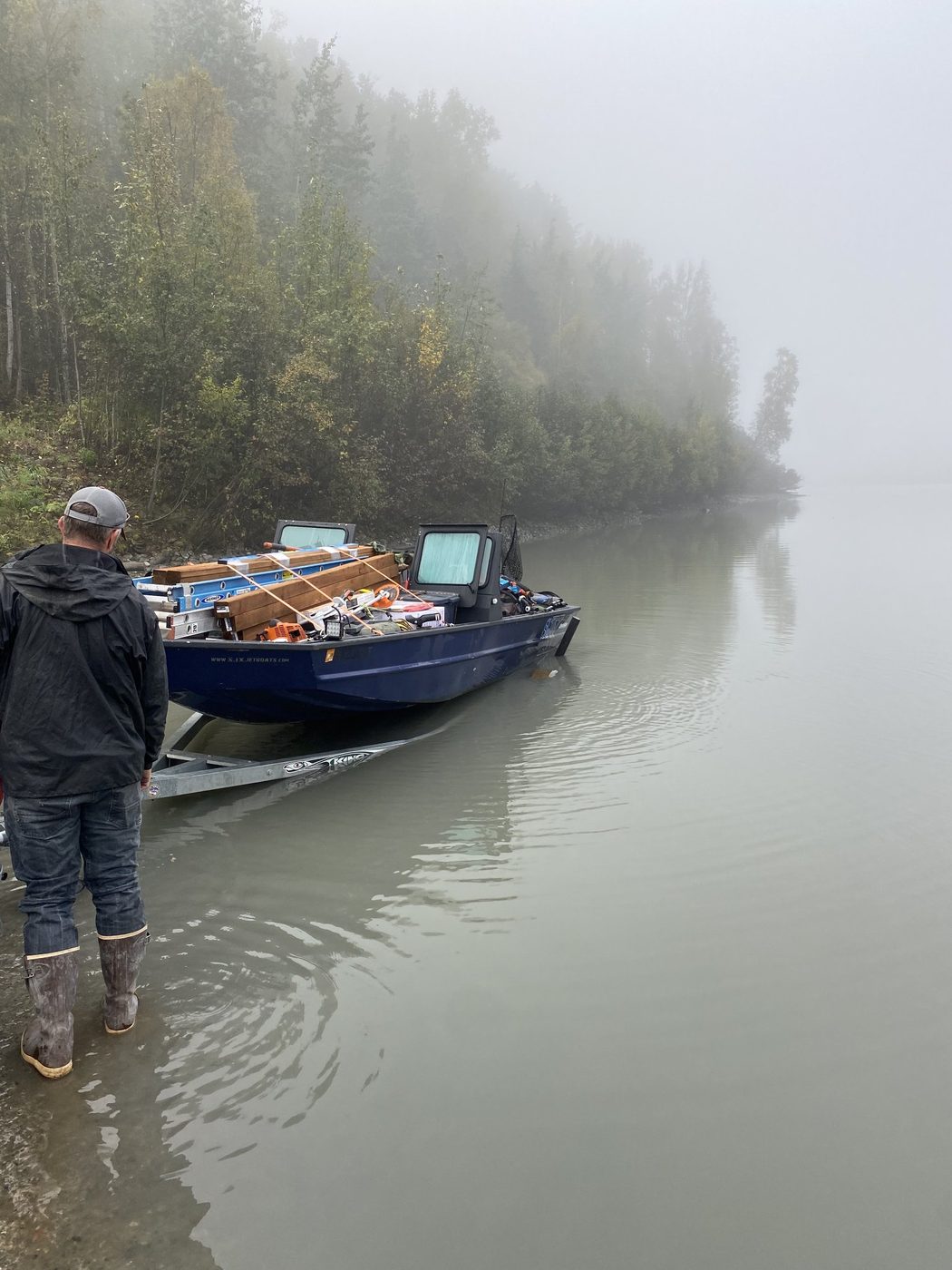
A small boat overloaded with lumber, ladders, a chainsaw and fuel at a riverbank
Loaded past the point of good judgment: lumber, ladders, chainsaw, fuel.

You overload the boat because the alternative is another full trip, and another full trip is another full day. Every overloaded run feels like a smart decision right up until it doesn't.
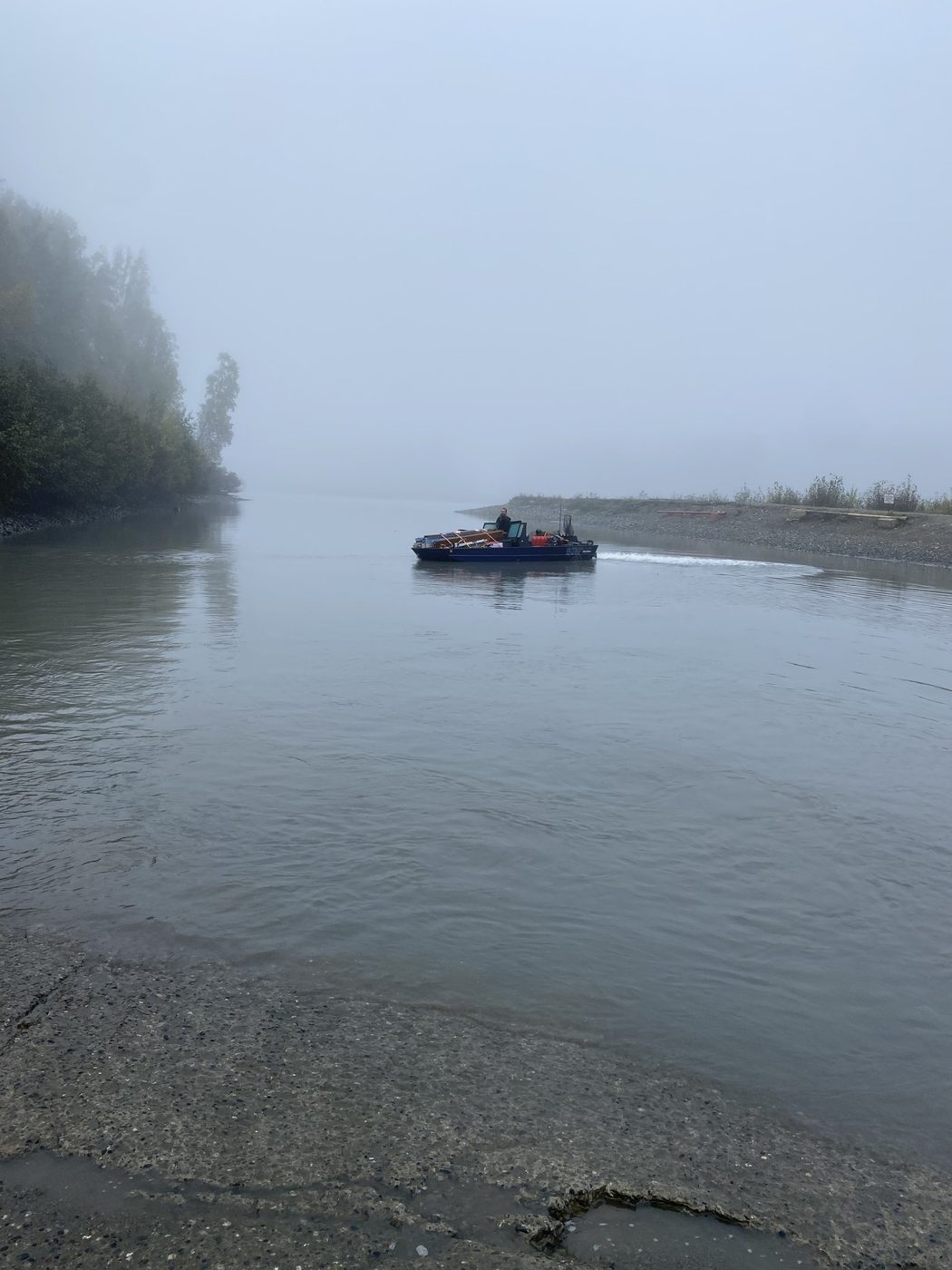
A boat disappearing into thick fog on a wide gray river
Into the fog anyway.

A different trip put a hole in the hull. The repair happened on a riverbank with an excavator for a lift, straps holding the boat up, a Delo barrel for a stand, and me underneath it with sealant. Field repairs don't look like the manual. They look like this.
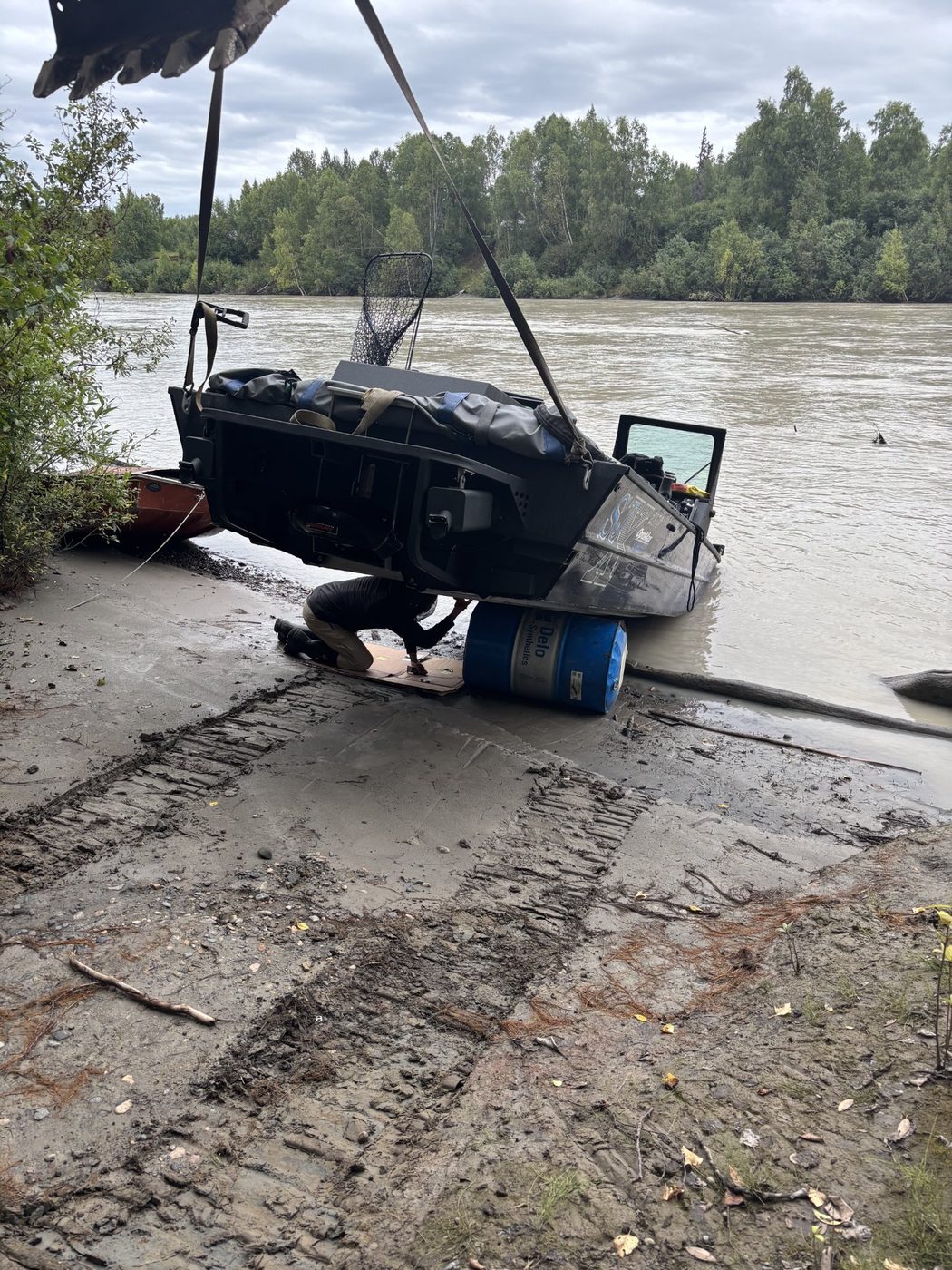
Chad lying under a boat hoisted by excavator straps, applying sealant to a hole in the hull
Same boat, different trip: a hole in the hull, fixed with straps, a barrel, and sealant — applied from underneath.
"The river doesn't care about your schedule. It has its own."
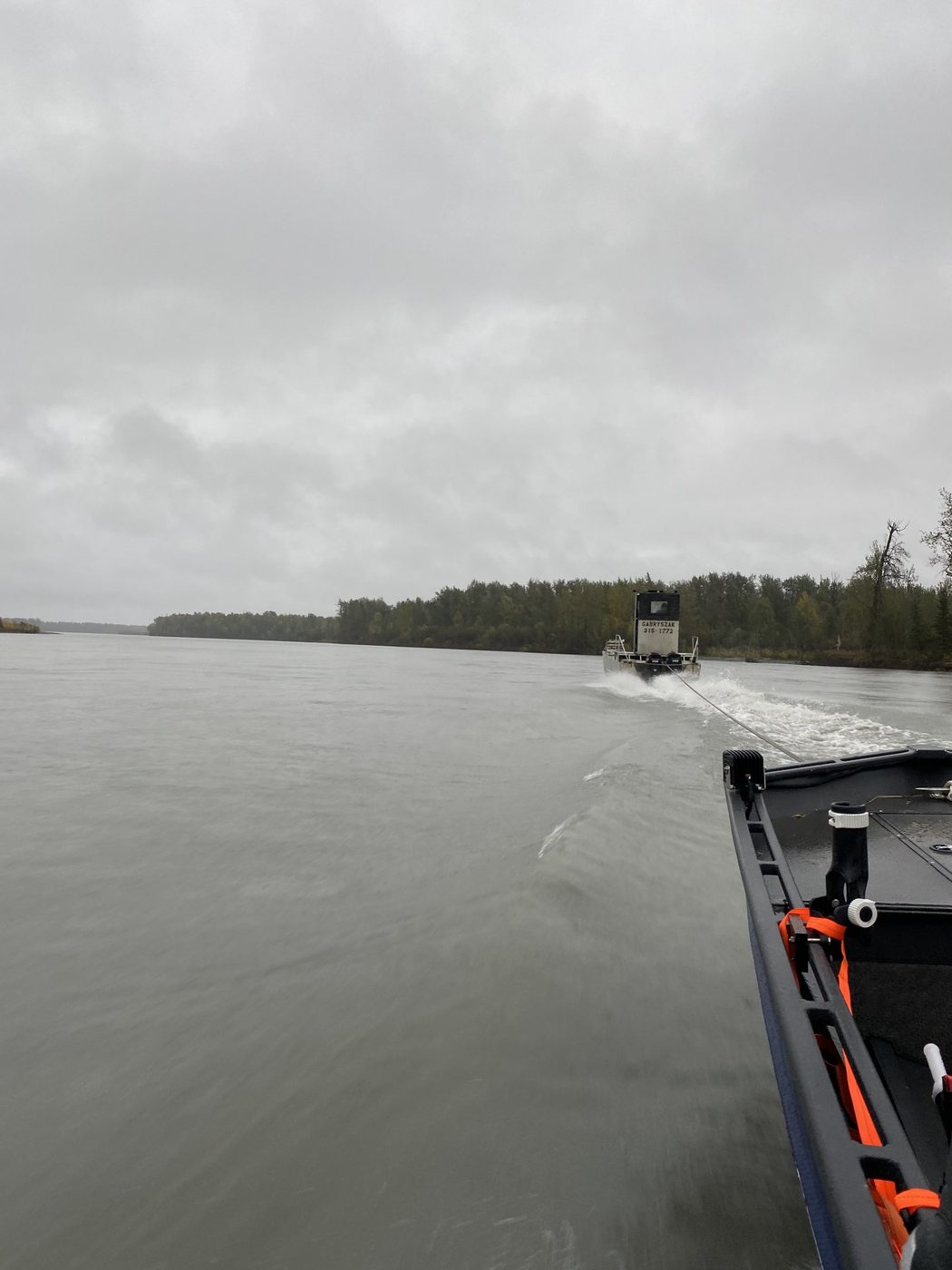
A boat under tow on the Yentna River, tow rope stretching to another boat ahead
This trip ended on a tow rope, back down the Yentna.
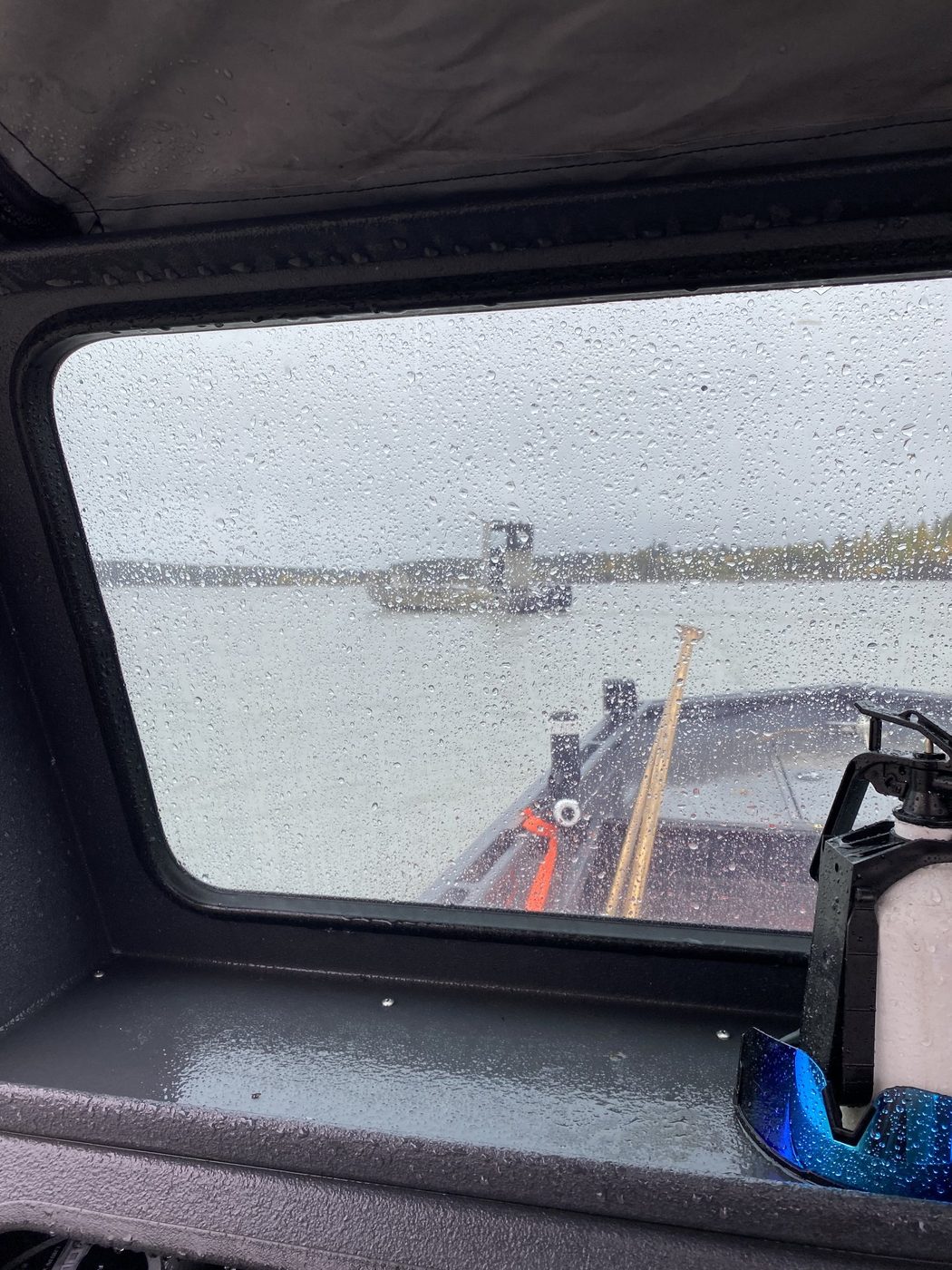
Rain-streaked view through a boat cabin window on a gray river
It rained the whole way back. Of course it did.
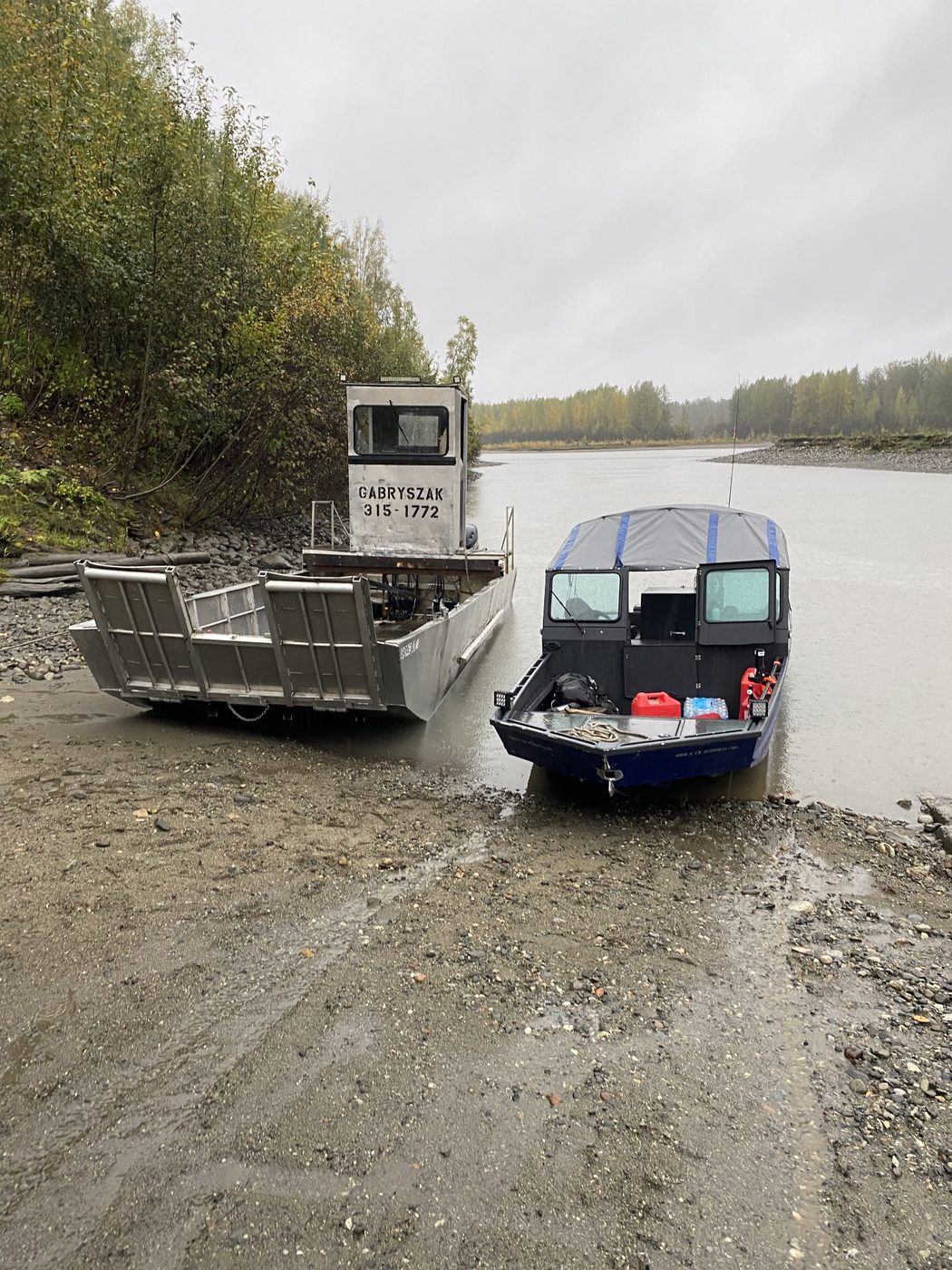
Two boats beached on a muddy riverbank at low water
Beached, unloaded, lesson logged.

The lesson

Respect the load rating, respect the weather, and carry a real repair kit — not the one you think you'll need, the one for the thing you can't imagine breaking. On the river, self-sufficiency isn't a virtue. It's the only option.

More mishaps where these came from.

Bear encounters, bear spray incidents, and the four-wheeler that got eaten — those chapters are still being written. The build teaches you something new every season.

Get in touch